Sleepbuds vs Earplugs: Active Masking or Passive Isolation

Affiliate disclosure: Some links on this page are affiliate links. If you buy through them we earn a small commission at no extra cost to you. Recommendations are research-driven; we don't claim personal use of every product reviewed. Product prices and availability are accurate as of the date published and are subject to change. Always check Amazon for current pricing before purchasing. Learn more.
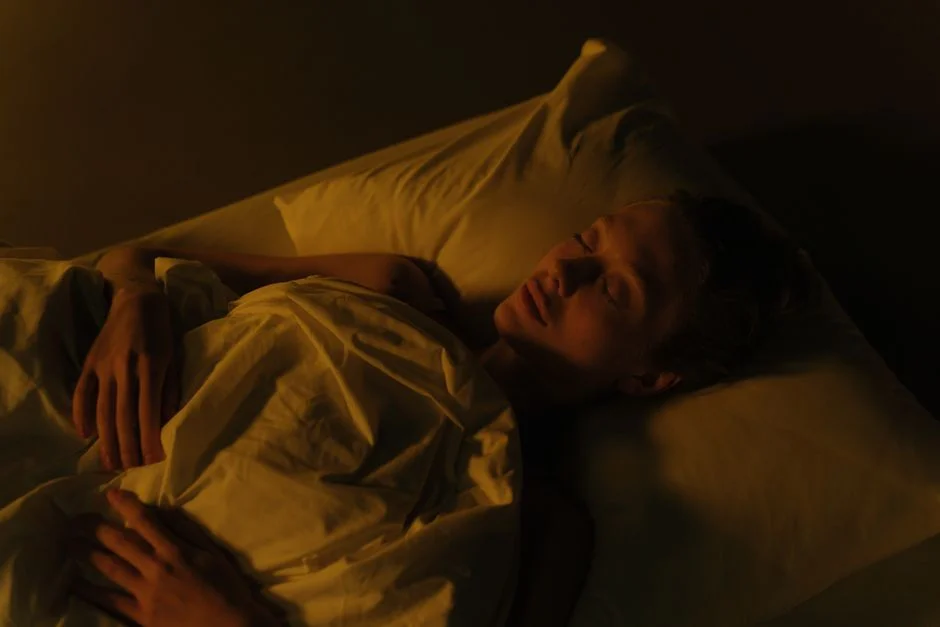
Foam earplugs have been the default sleep-noise fix for decades, but they solve only half the problem. The Soundcore Sleep A20 takes a different approach , active sound masking built into a side-sleeper-friendly form factor. The Loop Quiet 2 sits at the other end of the spectrum: passive isolation, no battery, no app, no fuss. Both are mid-range options; neither is obviously wrong. The question is which trade-offs you can actually live with across a full night.
The decision hinges on two things more than any spec: how you sleep, and what kind of noise you’re dealing with. Side sleepers face a comfort problem that no earplug rating can solve on its own.

Quick Verdict
The Soundcore Sleep A20 is the stronger choice for most light sleepers , particularly side sleepers who’ve given up on earplugs after waking with ear soreness halfway through the night. Its flat, recessed profile is purpose-built to sit flush against a pillow, and spec sheets put noise reduction at 30dB targeting the high-frequency range where snoring and street noise tend to land. An 80-hour battery claim , discount that by 20, 25% based on long-term owner reports, and you’re still looking at 60-plus hours between charges , means it handles travel without constant top-ups.
The Loop Quiet 2 earns its place for sleepers who want complete simplicity. No charging, no app, no firmware updates. Owner reports consistently describe the fit as genuinely soft for an earplug, and its reusable silicone construction means no restocking foam disposables. If your noise environment is moderate , a fan running in the next room, light traffic , passive isolation at this comfort level may be all you need.
The shared limitation worth knowing: neither product eliminates low-frequency rumble effectively. Deep bass from traffic or HVAC systems passes through passive isolation and isn’t targeted by the A20’s masking profile either. If low-frequency noise is your main problem, that’s a different category of product entirely , see the broader sleepbuds guide for options that address the full spectrum.
Specs at a Glance
| Spec | Soundcore Sleep A20 | Loop Quiet 2 |
|---|---|---|
| Noise reduction | 30dB (high-frequency) | ~26dB SNR (passive) |
| Battery life | 80 hours (claimed) | None , passive |
| Charging case | Yes | N/A |
| Driver type | Active masking + speaker | Passive silicone |
| Side-sleeper profile | Flat / recessed | Loop ring design |
| Sound content | White noise, nature sounds, music | None |
| App required | Soundcore app (optional) | None |
| Reusable | Yes | Yes |
| Price tier | Mid-range | Mid-range |
Soundcore Sleep A20 , Strengths and Trade-offs
The Soundcore Sleep A20 is purpose-built around one insight that most general earphones miss entirely: the majority of light sleepers are side sleepers, and side sleepers spend hours with their ear pressed against a pillow. Manufacturer design documentation describes a low-profile shell explicitly shaped to reduce pillow pressure. Owner threads on r/sleep back this up , the consistent report is that the A20 stays comfortable through the night in ways that protruding earbuds simply don’t.
The 30dB noise reduction figure targets high-frequency sounds , the range that covers most snoring, mid-range traffic noise, and the kind of irregular household sounds that jolt light sleepers awake. Spec sheets show this is achieved through a combination of passive seal and active masking content rather than active noise cancellation in the traditional sense. That distinction matters: the A20 doesn’t cancel sound electronically; it masks it with layered audio. Owner consensus from long-term threads suggests this works well for consistent noise sources and less well for sudden loud impacts.
Battery performance is one of the A20’s clearest advantages in this category. The 80-hour claim is generous, and owner reports consistently suggest real-world performance lands 20, 25% lower , still 60-plus usable hours. For context on how the A20 compares within Soundcore’s own lineup, the Soundcore Sleep A20 vs A30 breakdown covers the spec evolution in detail. That battery margin makes the A20 a practical travel option without daily charging anxiety.
The trade-off is real: this is still an in-ear device, and some owners report that the seal , necessary for the masking to work , creates discomfort after several hours, particularly for those with smaller ear canals. Fit is always individual. The A20 ships with multiple ear tip sizes, which addresses part of that variance, but it doesn’t eliminate it. Owner reports from r/sleep suggest that the earplug-style tips included in later production runs fit more comfortably than earlier versions.
Check current price on Amazon.
Loop Quiet 2 , Strengths and Trade-offs
Passive isolation has one structural advantage that no battery-powered product can match: it works indefinitely without any maintenance beyond cleaning. The Loop Quiet 2 is a reusable silicone earplug with a distinctive circular outer ring. That ring isn’t decorative , Loop’s design documentation describes it as a resonance channel that shapes which frequencies are attenuated. Spec sheets put SNR at approximately 26dB, which is competitive with mid-range foam disposables while offering a more consistent fit geometry across wearings.
Owner reports on the comfort dimension are notably positive relative to silicone earplugs generally. The Loop Quiet 2’s shape distributes pressure across the outer ear rather than relying solely on canal compression, which is the mechanism that makes foam plugs painful for side sleepers over a full night. Long-term owner threads describe extended wear , four to six hours pressed against a pillow , without the ear soreness that’s common with cylindrical plugs. That’s a meaningful comfort profile for a passive product.
The honest limitation is that 26dB of passive attenuation has a ceiling. Loud environments , a partner who snores heavily, urban street noise with sirens, a noisy hotel , will push past it. The Loop Quiet 2 doesn’t adapt to the noise level; it attenuates uniformly. Owner reports from noisier households consistently note that the Loop Quiet works well for ambient noise management but falls short when the noise source is strong and irregular. If your environment regularly exceeds moderate noise levels, passive isolation at this rating will leave gaps. For comparison, the active masking approach used in purpose-built sleepbuds , and how those compare against each other , is worth reviewing in the Ozlo Sleepbuds vs Soundcore piece for a broader view of the category.
The maintenance requirement is minor but real. Silicone collects skin oils and earwax, and the Loop Quiet 2 needs regular washing to stay hygienic. Owner consensus suggests this takes under a minute and becomes routine quickly , but it’s a habit the Loop Quiet requires that a disposable earplug doesn’t.
Check current price on Amazon.
Which Should You Pick
Side sleepers dealing with consistent mid-to-high-frequency noise , snoring partners, urban traffic, early-morning ambient sounds , should go with the Soundcore Sleep A20. The flat profile holds up through the night in a way that protruding earbuds and most cylindrical plugs don’t, and the masking content adds an active layer that passive attenuation can’t match. The battery life makes it a practical long-term tool, not just an overnight experiment.
The Loop Quiet 2 is the better answer for sleepers with moderate noise problems who want zero complexity. No charging schedule, no app dependency, nothing to update. It also suits travel in a different way than the A20 , carry-on friendly, TSA-invisible, no battery anxiety. If your noise environment is manageable and your priority is the simplest possible solution with a comfortable fit, passive isolation at this build quality is a reasonable endpoint.
There’s a third profile worth naming: sleepers who’ve already tried multiple earplugs and consistently wake with ear pain. For that group, the A20’s side-sleeper engineering is the more important spec than the noise reduction number. Comfort failures at 3am matter more than attenuation ratings on a page. The full sleep earbuds guide covers additional options if neither product fits your specific ear geometry or noise profile , including alternatives purpose-built for lighter noise environments and those targeting heavier ones, like the options reviewed in the 1More Z30 vs Soundcore Sleep A20 comparison.
Frequently Asked Questions
Are the Soundcore Sleep A20 or Loop Quiet 2 better for side sleepers?
The Soundcore Sleep A20 is built specifically for side sleepers, with a recessed shell designed to sit flush against a pillow without creating pressure points. The Loop Quiet 2 performs better than most cylindrical foam plugs for side sleepers due to its outer-ring pressure distribution, but it’s not purpose-engineered for the position the way the A20 is. Side sleepers who’ve had consistent earplug discomfort overnight are more likely to find relief with the A20.
Does the Soundcore Sleep A20 use active noise cancellation?
No , and that distinction matters. Spec sheets describe the A20’s noise reduction as a combination of passive seal and active masking content (white noise, nature sounds, music) rather than electronic ANC. It doesn’t analyze and invert incoming sound; it covers noise with layered audio through the speaker. Owner consensus suggests this works reliably for consistent background noise but is less effective against sudden loud impacts than traditional ANC.
How long do Loop Quiet 2 earplugs actually last?
Loop markets the Quiet 2 as reusable with proper cleaning, and long-term owner reports generally support that claim , most owners describe getting months of regular use from a single pair before the silicone shows meaningful wear. Cleaning with mild soap and water is the standard maintenance. The lifespan depends on wear frequency and cleaning habits, but owner consensus puts replacement cycles well beyond what you’d get from disposable foam.
Can the Soundcore Sleep A20 handle loud snoring?
Owner threads on r/sleep give a mixed picture. The 30dB high-frequency reduction plus masking content handles moderate snoring effectively for most users. Heavy, irregular snoring , particularly deep low-frequency snoring , is harder to address, and some owners report that the masking content needs to be set at a volume level that itself becomes disruptive. For very loud snoring environments, a comparison like Soundcore Sleep A20 vs A30 may be worth reading to see if higher-spec options address the gap better.
Which product is easier to travel with?
Both travel well, but differently. The Loop Quiet 2 requires nothing beyond a small case , no charging, no cables, no battery management. The Soundcore Sleep A20 has an 80-hour battery claim that makes multi-night trips viable without searching for outlets, but it does require a charging case and USB cable in your bag. For a single overnight trip, the Loop Quiet 2 is simpler.
Where to Buy
Soundcore Sleep A20 by Anker Sleep Earbuds, 30dB High-Frequency Noise Reduction, Small Earplugs for Side Sleepers, 80HSee Soundcore Sleep A20 by Anker Sleep Ea… on Amazon